

January 15, 2025
Venerable Edel Quinn
Dear Friends,
First evangelized by St Patrick as early as the 5th century, Ireland has sent many missionaries around the world. In 1921, the Legion of Mary was founded in Dublin. With the approval of the Church and under the powerful guidance of Mary Immaculate, this lay association of Catholics seeks to work for the glory of God through the sanctification of its members, prayer and benevolent service to their neighbors. It aims to bring Mary to the world as an infallible means of winning the world to Jesus. It currently has several million members in some 170 countries.
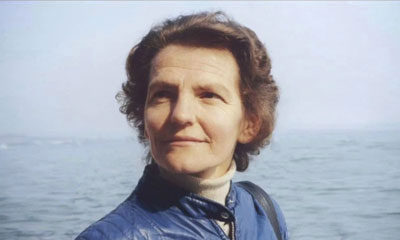
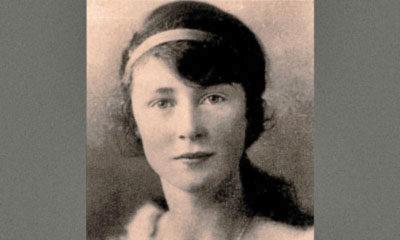 One member of the Legion of Mary, Edel Mary Quinn, was declared Venerable by Pope John Paul II on December 15, 1994. She was born in Kanturk in the Republic of Ireland on September 14, 1907, and was baptized four days later. Her parents had chosen the name Adele, but the priest mistook it for Edel; assuming it to refer to the edelweiss flower, he asked no further questions and entered the name in the register. Edel was the oldest of her family; four brothers and sisters would follow. Her father, Charles, was a bank employee whose promotions led him to move house frequently with his family, before settling permanently in Dublin in 1924. Mrs Quinn, with her profound piety, was a model of energy and of delicate and refined kindness.
A nun who knew Edel when she was ten years old later testified: “She was a real imp at school, not indeed bold, but always bubbling over with good spirits, full of life and gaiety, and up to every kind of prank… To the simplicity of a child she united great poise and attractiveness… Her unselfishness and her readiness to do a service were notable. She was a born organizer, everything she undertook she did well.” She excelled at sports and dancing. She also received a thorough Christian formation. Her first Holy Communion in 1916 filled her with hunger for the Eucharist. Following her father’s reverses in fortune, Edel was forced to abandon her studies and return home. She went to Mass every day and read extensively.
When she was nineteen, Edel started looking for a job. She was engaged as a secretary by an importation company, recently founded in Dublin by a Frenchman. She would leave there the memory of a shy but brave young girl. She soon found her feet and became a reliable secretary. She learned French; her spiritual life was to benefit greatly from reading French authors. From their first meeting, her employer had been struck by her smile: “It was something bright and frank, wholly attentive and understanding, it shed light around her.” Such was her wealth of human qualities that he fell in love with her. Just before leaving Ireland to take his business elsewhere, he asked her to marry him. To his amazement, Edel replied that she could not accept, having promised herself to God. Indeed, the young girl had sensed a call to the contemplative religious life from an early age. However, fearing that her refusal would imperil her suitor’s spiritual life, she kept up a correspondence with him for some time, writing friendly letters that did him much good.
While waiting to be able to fulfill her vocation, Edel played golf and made music for recreation. But little by little, she gave up these legitimate pleasures and turned to service, helping her mother at home, as well as the poor and the sick. Sunday was truly the Lord’s Day for her. She attended several Masses in the morning and studied her faith in greater depth, so that her Christian formation widened considerably. Her thirst for prayer and meditation was intense. Yet she often found time to help her friends, listening sympathetically to what they had to say. In 1927, at the age of twenty, still waiting to find out which community to join as a nun, she enrolled in the Legion of Mary, an association founded by Frank Duff (1889–1980), a civil servant working for a government ministry (his beatification process has been introduced). Originally, he had conceived it as a group of just a few people, but his local initiative was to expand worldwide. He himself was called upon to speak in the presence of bishops from all over the world during the Second Vatican Council. Submission to the Church’s Magisterium was a fundamental principle for the Legionaries. They were to take an active part in the life of their parishes, contributing to all their activities, especially visiting families and the sick, both at home and in hospitals. Each Legionary was expected to carry out a weekly apostolic task.
At a meeting of the Children of Mary, of which she was already a member, Edel befriended a young woman Legionary who introduced her to the leader and to the chaplain of the movement. Full of enthusiasm, Edel asked to be admitted to the movement, and was accepted. Before long, going above and beyond the prescribed requirements, she was visiting people in need five evenings a week. After two years of service as an ordinary active member, she became responsible for a group working with street girls. Two evenings a week, she visited the Sancta Maria home for converts, exercising her gift of radiant sympathy. As a result, she was always joyfully welcomed by the residents, who would have wanted never to let her go.
My Greatest Joy
Edel was drawn to the powerful and demanding Franciscan spirituality of the Poor Clares. In 1932, just as her plan to join their convent in Belfast was taking shape, she fell ill with tuberculosis, which at the time was virtually incurable. “Everything that happens is adorable,” she said, that is to say, “God’s Will.” She was sent to a sanatorium, where she continued her life of dedication and mortification, always cheerful and at the service of all. She devoted much of her time to reading spiritual works, especially the writings of St Therese of the Child Jesus. After eighteen months, which seemed a very long time to her, she returned home, disarming with her smile the objections of those who would have liked her to extend her time of rest. For a few months, she continued to comply with her doctor’s orders, but soon resumed her professional work and her commitment to the Legion. Its growth remained slow at this time. It did not extend beyond Dublin until 1927, and only expanded from Ireland to Scotland in 1928. But from that year onwards, the pace quickened. In 1930, the Legion established itself in India, and in America the following year. In 1934, a pilgrimage to Lourdes was organized by the Legionaries, in which Edel took part. On her return, she was sent as a foundress to Wales with a number of companions: meetings, conferences, and various visits, especially to bishops, filled two weeks of exhausting work that bore great fruit. Surprisingly, she returned to Ireland in better health. Meanwhile, groups were springing up in Africa. In 1936, Edel left for Central and East Africa as a missionary of the Legion of Mary. There was strong opposition to this mission on the part of the Legion’s Higher Council, but Edel’s good grace and reputation, with the help of the Holy Spirit, triumphed over all. “To suffer for love of Our Lord is my very greatest joy,” she wrote.
Winning Hearts
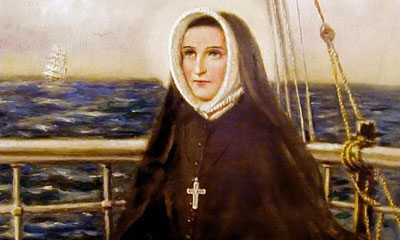
Edel’s first letter during the voyage was to thank those who had sent her, despite the risks she was well aware of. On November 23, her ship reached the Kenyan port of Mombasa, a British colony where the Muslim influence was very strong. Edel immediately travelled to the country’s capital, Nairobi, where she made contact with the main Catholics in the area, including a few Legionaries. She listened to all and, undeterred by objections, organized an introductory conference. On December 15, the first group was founded and Father Maher, superior of the missions in the region, became its spiritual director. Edel set about blending her apostolate with that of the missionaries, hoping to win them over to her cause. Beginnings are often rocky, but her union with God and her kindness won many hearts. She showed great respect for priests. In her presence, prejudice fell among Europeans and native Africans alike. While inflexible when it came to the general principles set out in the Legion of Mary Handbook, her ability to adapt to the practicalities of equatorial Africa proved remarkable: she sensed and accepted the African pace without abruptness. When faced with disappointments and setbacks, she never gave up. She succeeded in appeasing many inter-ethnic hostilities, and in softening certain traditions concerning women whose role was considered as being exclusively domestic. Evangelization was a priority for the Legion. By visiting homes and by other means, she established contact with every person. Seeing and serving Christ in the sick and marginalized is also an essential part of the Legionary apostolate.
The Legion’s basic unit is called a Praesidium; it is normally based in a parish, which may in fact have several. To become an active Legionary, one must apply to join a Praesidium. At weekly meetings, members are assigned a task, usually working in pairs. After a successful probationary period, members take the Legionary Promise. Well aware of the need for the support of grace, the Legion has auxiliary members who contribute through prayer. The Legion is administered through its various councils at local, regional and national levels.
Despite her poor health, Edel showed surprising resilience to fatigue and to the heat. A nun who knew her at the time said: “She was the most unselfish person I ever met in my life!” Thanks to her dedication, hundreds of Legion of Mary groups were set up in Kenya, offering a profound reinforcement to evangelization. She learnt some Swahili and smatterings of several other dialects. The Legion’s organization, with its two-by-two apostolates and weekly reports, thrived marvelously, not least thanks to the drive of the ubiquitous young missionary, who not only closely supervised each group, but also kept abreast of the Legion’s progress in Europe, America and as far afield as China. Edel organized regular regional meetings and set up headquarters in Nairobi. She maintained an extensive correspondence, both with the groups she had founded, with local bishops and missionaries, and with her friends in Dublin.
Simply United to Him
She succeeded in having certain groups founded by the Africans themselves, and thus convinced these to become the evangelizers of their own people, something that had previously been the exclusive task of missionaries and catechists. She also successfully overcame the customary indolence of the native Africans, the hostility of sorcerers and difficult communications, especially during the rainy season. She was careful to preserve moments of recollection, even during her travels: “Simply to be with Him in union with Mary—just loving Him in my soul during the day, during traveling, uniting my actions with the similar actions done by Him whilst on earth.” In one of her favorite prayers, she asks, “Confer, O Lord, on us, who serve beneath the standard of Mary, that fullness of faith in You and trust in her, to which it is given to conquer the world. Grant us a lively faith, animated by charity” (cf. Gal 5:6).
The Mass remained the center of her life. On one occasion, she fasted for seventeen hours to be able to receive Holy Communion. Edel credited the Blessed Sacrament with her extraordinary resilience: “Without the Eucharist what a desolation life would be!”, she wrote. Her intense love for the Mother of God, her childlike trust and complete dependence on Her are the dominating features of her life. One day, she was asked if she had ever refused anything to Our Lady: “No,” she replied, “I could never refuse Our Blessed Lady anything I thought she wanted.” The Legion’s spirituality is centered on devotion to the Holy Spirit and the Virgin Mary. Franck Duff drew much of his inspiration from the “Treatise on True Devotion to the Blessed Virgin” by St Louis-Marie Grignion de Montfort. In it, this saint clearly shows that Mary leads to Jesus: “It was through the Blessed Virgin Mary that Jesus came into the world, and it is also through Her that He must reign in the world…” (no. 1). Among the qualities of true devotion to Mary, he insisted on this: “Third, true devotion to our Lady is holy, that is, it leads us to avoid sin and to imitate the virtues of Mary. Her ten principal virtues are: deep humility, lively faith, blind obedience, unceasing prayer, constant self-denial… It strengthens us in our desire to do good and prevents us from giving up our devotional practices too easily. It gives us the courage to oppose the fashions and maxims of the world, the vexations and unruly inclinations of the flesh and the temptations of the devil. Thus a person truly devoted to our Blessed Lady is not changeable, fretful, scrupulous or timid… The true subject of Mary… loves and serves Her just as faithfully in weariness and dryness of soul as in sweet and sensible fervor. He loves Her as much on Calvary as at Cana. How pleasing and precious in the sight of God and His holy Mother must these servants of Mary be” (nos. 108-110).
“They Are Not Ready”
In 1937, Msgr Riberi, the apostolic nuncio for the African missions, wrote a letter praising the Legion to the thirty-three bishops under his charge. In it, he commended Edel and her work. She expressed her gratitude for his gesture, and took advantage of it to expand her apostolate, forming a plan to go to Uganda, a country where ancestral traditions were even more difficult to overcome than in Kenya. She was told that the people were not ready to receive the Gospel. However, knowing that life, especially her own, is short, she did not let this stop her, and succeeded in founding many devout groups in the country, to the great joy of the missionaries, who greatly valued this precious help.
In 1938, Edel contracted malaria. The doctors prescribed rest. For the first time, this chronic invalid conceded defeat and took a few weeks’ rest, though she remained discreet on the subject in her letters to Dublin so as not to alarm her superiors. Despite her precautions, the information did reach them, and they invited her to come and rest in Ireland, where she could regain her health. She declined politely. In September 1939, war broke out in Europe, and some predicted the worst in Africa. Edel recorded in her intimate journal: “What boundless trust we should have in divine love. We can never love too much… The weakness which He leaves us must not hold us back from our desires… As regards my work, it will be really useful, if as time goes on, the war makes it difficult to get more priests from Europe for the Missions…”
In January 1940, at the request of the Archbishop Leen of Port-Louis, she went to Mauritius, despite being at risk from German submarines and floating mines. In five months, thanks to the prelate’s recommendations and the help of parish priests and missionaries, she founded twenty groups, with nearly three hundred active Legionaries, and a central body, before returning to the African continent. It is clear that she loved Mauritius and was loved there, as she in all the countries where she stayed. Fr Margeot, the Legion’s spiritual director for the island, recalled: “Miss Quinn was a soul of astonishing simplicity. She had achieved a very great interior union with God and seemed entirely abandoned to His Will.” He later told the archbishop that he would have wished to give evidence at an eventual process of canonization.
In Tanzania, where she arrived in September 1940, she immediately set to work, despite her exhaustion after a journey made longer by the war. No one realized how tired she was, as she responded to every request. But in March 1941, she cabled to Dublin: “Attack pleurisy—fairly weak. Weight seventy-five pounds. Impossible continue work at present. Considerable rest needed. Await instructions.” The answer came: “Act as you think we would wish you to in circumstances!” A doctor told her that after so much time spent in the tropics, it was essential for her to go to a country with a temperate climate to regain her health; she decided on Johannesburg, South Africa. From then on, she spent most of her time in sanatoria and also rested to some extent in religious communities. For the first six months, she remained bedridden, while intensifying her spiritual life, particularly through Eucharistic devotion. Despite instructions from Dublin, she kept up her voluminous correspondence. Six months after her arrival, Edel entered a hospital run by the Dominican Sisters, where she could receive Holy Communion every day. Her good humor and her kindness endeared her to all. Despite her extreme thinness, she was extraordinarily lively and cheerful. In the autumn of 1942, with the doctors’ permission, she returned to Nairobi. Because the war made travel complicated, her journey took almost three months. She stayed in a convent, but resumed her work as far as her strength allowed, attending meetings of Kenyan groups and writing many letters. She managed to hide her condition to some extent through her cheerfulness.
At the beginning of 1944, she was once again forced to take complete rest, this time in a community of Irish Sisters. She continued to make plans to expand in the future, which others would later fulfill. Her last journey, eighteen hours by train, took her to Kisumu on Lake Victoria, for just over a month. Having returned more dead than alive on April 11, she went back to work in Nairobi. Despite her worsening condition, she refused to call the doctor: “I don’t want to make a fuss!” Her last report to Dublin, posted on May 4, would only reach its destination after her death. “In regard to Mary, I must preserve the attitude of a child to its mother. I must trust that She will do what is best,” she had once written. It was in this spirit that she received the last sacraments, retaining sufficient consciousness to join in the prayers. After eight years of work in Africa, Edel Quinn died in Nairobi, at the convent of the Sisters of the Precious Blood, murmuring the Holy Name of Jesus, on May 12, 1944, aged thirty-seven.
Blessed, a Thousand Times Blessed!
True devotion to Our Lady, wrote St Louis-Marie Grignion de Montfort, “prompts us to go to Her in every need of body and soul with great simplicity, trust and affection. We implore our Mother’s help always, everywhere, and for everything. We pray to Her to be enlightened in our doubts, to be put back on the right path when we go astray, to be protected when we are tempted, to be strengthened when we are weakening, to be lifted up when we fall into sin, to be encouraged when we are losing heart, to be rid of our scruples, to be consoled in the trials, crosses and disappointments of life… Blessed, a thousand times blessed, are those Christians who bind themselves faithfully and completely to Her as to a secure anchor! The violent storms of the world will not make them founder or carry away their heavenly riches. Blessed are those who enter into Her as into another Noah’s ark! The flood waters of sin which engulf so many will not harm them because, as the Church makes Mary say in the words of divine Wisdom, ‘Qui operantur in Me non peccabunt: Those who work with My help—for their salvation—shall not sin’ (Si 24:30)” (Ibid., nos. 107, 175).
Let us ask the venerable Edel Quinn to obtain for us the grace to draw from the Heart of the Virgin Mary, Mother of the Church, a great solicitude for the eternal destiny of the men of our time, redeemed by the Blood of Her Son!