

September 17, 2025
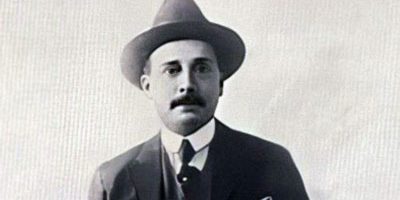
Blessed José Hernández Cisneros
Dear Friends,
“A saint has died!” With these words did the devastated inhabitants of Caracas (Venezuela) greet the news of the accidental death of Dr. José Gregorio Hernández Cisneros on 29 June 1919. The doctor’s funeral was more like a triumph, making the front pages of local newspapers and bringing together top government, science and religious figures, along with thousands of ordinary people. Without waiting for the Church’s approval, crowds prayed to him to obtain favors, and his grave became a shrine for pilgrims. As reports of miracles poured in, his reputation for holiness grew. Popular devotion developed, be it in the form of veneration of statues bearing his likeness or through novenas, and even spread beyond the Catholic Church.
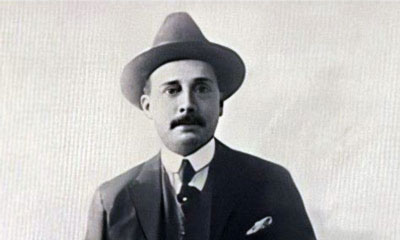 The scale of this veneration led the Catholic Church authorities to open the canonical process in view of his possible beatification in 1949. On 16 January 1986, Pope Saint John Paul II declared Dr. Hernández Cisneros Venerable. In 2018, a canonical enquiry was launched into a miraculous healing said to have been obtained through his intercession. A ten-year-old girl from Venezuela, Yaxury Solórzano, had received a shot in the head from a pellet rifle when her father’s house was burgled in March 2017. She was rushed to the San Fernando de Apure hospital with a skull injury, and underwent neurosurgery during which part of her parietal bone was removed.
Her life was saved, but the doctors said that the neurological sequelae would be catastrophic. During the operation, the child’s mother fervently implored Dr. José Gregorio Hernández to intercede with God. She immediately sensed the presence of Dr. Hernández, feeling a hand on her shoulder and hearing a voice say, “Do not be afraid, all will be well!” A few days after the operation, against all odds, the girl made a remarkable recovery, without any sequelae and with all her neurological abilities intact. On 9 January 2020, the medical commission of the Congregation for the Causes of Saints recognized her recovery as scientifically unexplainable; Pope Francis declared the miracle authentic and signed José Gregorio Hernández Cisneros’ decree of beatification on 19 June 2020.
José Gregorio Hernández Cisneros was born on 26 October 1864, in Isnotú, a town in the state of Trujillo, Venezuela. He was the eldest of six siblings. Through his mother, José Gregorio belonged to the family of Cardinal Francisco Jiménez de Cisneros (1436–1517), who was confessor to Isabella the Catholic, Queen of Castile and Spain (1451–1504), and the founder of the University of Alcalá. On his father’s side, he was related to the Ecuadorian educator and writer Saint Miguel Cordero Muñoz (1854–1910), a Brother of the Christian Schools. José Gregorio was baptized three months after his birth, on 30 January 1865.
His father ran a drugstore. “My mother taught me virtue from the cradle,” José Gregorio would later say, “she raised me to know God and made charity my guide.” “Let us take note: it is moms who pass on the faith. The faith is passed on in dialect, that is, in the language of moms, that dialect that moms use to speak with their children. And to you, moms: be mindful in passing on the faith in that maternal dialect,” Pope Francis commented at the general audience on 13 September 2023. José Gregorio received the sacrament of Confirmation when he was only three years old, as was the custom at the time. He was eight when his mother died. Having made good progress at school, he wanted to study law. But his father suggested that he study medicine instead, and José Gregorio came to see this as a vocation. It meant that he would have to move to the capital, Caracas. For this young man who had never left his native village, it was a long journey by mule, boat, and train, in a country only just emerging from a period of civil war.
From 1878 to 1882, he attended Villegas College, which was headed at the time by its founder, Dr. Guillermo Tell Villegas. He and his wife soon became friends with the young student, who was well liked by his teachers and achieved good results. José Gregorio was seventeen when he obtained his baccalaureate in philosophy. He then enrolled at the Central University of Venezuela (UCV) to study medicine. He received high praise from his professors for his good conduct, diligence, regular attendance and academic success. Excelling in most subjects, he also studied languages and became fluent in English, German, French, Italian and Portuguese, and had a good command of Latin. On 29 June 1888, he obtained his PhD in medicine after presenting his thesis to the Rector of the University and a board of examiners. This work concentrated on questions related to bacterial diseases, which would later become the focus of his medical career. He would go on to be considered the founder of bacteriology in Venezuela.
“My Place Is Not Here”
University rector Dr. Dominici offered José Gregorio, now a medical doctor, financial assistance to open a practice in Caracas. “Dear Dr. Dominici,” he replied, “I am very grateful for your offer, but I am convinced that my place is not here. I must return to my village. There is no doctor in Isnotú, and that is where I must go, that is where my own mother asked me to return to relieve the suffering of the poor people of our land. Now that I am a doctor, I realize that my place is among my people.” And so he left for Isnotú in August of 1888. He was twenty-four years old. On September 18, he wrote to his friend Dr. Dominici: “I have been well received by my patients, but it is difficult to care for people here because of the deeply rooted preconceptions with which we must contend: they believe in a number of remedies that consist in saying mysterious words. The clinic is very poor: everyone has dysentery. The available treatments are even more deplorable…”
A year later, he travelled to the three Andean states of Venezuela (Trujillo, Mérida and Táchira), where he sought in vain to establish a medical center from which he might serve the surrounding area. Back in Isnotú, he found a letter from one of his former professors, Dr. Calixto González, in which the latter let him know that he had recommended him to the government for a scholarship to study in Europe. Because of the existing shortage of doctors dedicated to experimental research, the President of the Republic, Juan Pablo Rojas Paúl (1826–1905, president from 1888 to 1890), had recently decreed that a young Venezuelan doctor would be sent to France to study for a year in 1889. José Gregorio was then to return to Caracas and share his new knowledge in his homeland. Eager for knowledge and curious by nature, José Gregorio proved to be a born researcher, possessing all the right qualities to make the most of his studies abroad.
José Gregorio arrived in Paris in November 1889 and devoted himself to research in the laboratory of Charles Richet (Nobel Prize winner in 1913), a professor of experimental physiology at the School of Medicine. He was particularly interested in the work of Mathias Duval, who specialized in histology, bacteriology and embryology. He also became involved in Christian social works such as the Society of Saint Vincent de Paul, founded by Blessed Frédéric Ozanam and his friends. In his eagerness to learn about German scientific innovations, he travelled to Berlin before returning to Venezuela. At the age of twenty-six, José Gregorio was appointed to a professorship at the University of Caracas. Following a government request, he invited several doctors from Europe to work at the Vargas Hospital. In 1890, he helped to establish a school of nursing. The following year, after returning from another trip to Europe, he was appointed to the chair of histology and experimental physiology at the University of Caracas. He also founded the first chair of bacteriology in the Americas. The government granted him substantial financial support allowing him to purchase the necessary equipment and essential publications on these new subjects. However, his arduous pioneering work was sometimes met with incomprehension.
Scientific Publications
It was this young professor who introduced the use of the microscope—a tool essential for research—to Venezuela. He also acquired other scientific instruments, including those needed for the study of microbiology. In 1893, he wrote several articles in the Gaceta Médica, and in 1906 published Elementos de Bacteriología, a work hailed by experts as a masterpiece of conciseness and clarity. He went on to publish eleven further scientific works (two more would remain unpublished) and, between 1907 and 1912, five literary works. Both by nature and inclination, José Gregorio was a profound philosopher and an artist of refined sensibility. Given to reflection and endowed with a subtle critical mind, he felt a deep concern for the great problems of humanity. In his Elementos de Filosofía (1912), he set out his vision of the world and of human relations with one another and with God.
As an actively involved Catholic at local and national levels, José Gregorio joined the Franciscan Third Order on 7 December 1899, in the parish of Our Lady of Mercy in Caracas. Both his private and professional life were deeply imbued with the spirit of Saint Francis. He was patient and poor in all things, and strove to recognize and serve Jesus in every human being. The Third Order was founded by Saint Francis of Assisi in 1221 for lay people of both sexes who want to live according to his spirituality as fully as possible while remaining within the world; it can also be joined by diocesan priests. Among the illustrious members of this Third Order are Saint Louis, King of France, and several popes, including Leo XIII. The “Tertiaries” strive to nourish their prayer life by studying the truths of the faith; out of their great devotion to the Passion of Christ, they draw concrete love for their neighbor. This institution served as a model for other lay associations attached to religious orders.
Intimacy with God
“Where did José Gregorio get all this enthusiasm, all this zeal? It came from a certainty and a strength. The certainty was God’s grace. He wrote that if there are good and bad people in the world, the bad are such because they themselves have become bad: but the good are such with God’s help (27 May 1914). And he considered himself first of all to be in need of grace, begging on the streets and in dire need of love. And this was the strength he drew on: intimacy with God. He was a man of prayer—there is the grace of God and intimacy with the Lord. He was a man of prayer who participated at Mass” (Pope Francis, 13 September 2023).
José Gregorio was responding to the gratuitous love of God who created us and calls upon us to exercise the virtue of faith. Saint John Paul II wrote: “The Council teaches that ‘the obedience of faith must be given to God who reveals himself’ (Constitution Dei Verbum, no. 5). This brief but dense statement points to a fundamental truth of Christianity. Faith is said first to be an obedient response to God. This implies that God be acknowledged in his divinity, transcendence and supreme freedom. By the authority of his absolute transcendence, God who makes himself known is also the source of the credibility of what he reveals. By faith, men and women give their assent to this divine testimony. This means that they acknowledge fully and integrally the truth of what is revealed because it is God himself who is the guarantor of that truth… This is why the Church has always considered the act of entrusting oneself to God to be a moment of fundamental decision which engages the whole person… It is not just that freedom is part of the act of faith: it is absolutely required. Indeed, it is faith that allows individuals to give consummate expression to their own freedom. Put differently, freedom is not realized in decisions made against God… Men and women can accomplish no more important act in their lives than the act of faith; it is here that freedom reaches the certainty of truth and chooses to live in that truth” (John Paul II, encyclical Fides et ratio, 14 September 1998, no. 13).
In 1907, José Gregorio made the decision to enter the religious life. After consulting with the Archbishop of Caracas, Juan Bautista Castro, he wrote to the Prior of the Carthusian monastery of Farneta, near Lucca in Italy (the Carthusians, a purely contemplative order of monks, were founded in the 11th century by Saint Bruno). José Gregorio was accepted into the novitiate and took the name of Brother Marcel. But after a few months, he fell so seriously ill that the Prior decided it would be best to send him back to Venezuela to recover. On his return to Caracas in April 1909, he was admitted to the Seminary of Saint Rose of Lima; however, the desire for monastic life remained deeply rooted in his soul. Three years later, he went to the “Collegio Pío-Latino-Americano” in Rome to study theology. He believed that the priesthood was “the greatest thing on earth.” But once again, a respiratory illness forced him to return to his native country.
To Heal and to Protect
On 14 September 1909, José Gregorio was appointed professor of anatomic pathology, a science that involves identifying various diseases by examining small tissue samples with the naked eye or under a microscope, allowing for highly accurate diagnoses. He was tasked with helping to set up an analytical laboratory linked to the Vargas Hospital, a position he held until 1911. He was a driving force behind research and teaching in important medical subjects, in which he was the only specialist at the time. He is also considered to have introduced the application of chemistry and mathematics to biological and physiological disciplines in Venezuela. Ranking among the great professors of medicine, he excelled as an outstanding teacher: he introduced a truly scientific and didactic approach to teaching, based on the observation of vital phenomena and laboratory testing. He trained a school of researchers who would play a major role in the country’s medical field, including Rafael Ragel, the founder of parasitology. The practical applications of José Gregorio’s experiments were focused on the ultimate goal of medicine, which is none other than to heal the sick and protect their God-given life.
Nowadays, as Pope Saint John Paul II pointed out, “In the field of scientific research, a positivistic mentality took hold which not only abandoned the Christian vision of the world, but more especially rejected every appeal to a metaphysical or moral vision. It follows that certain scientists, lacking any ethical point of reference, are in danger of putting at the center of their concerns something other than the human person and the entirety of the person’s life” (ibid., no. 46).
At the end of 1912, the dictatorial government of General Juan Vicente Gómez ordered the closure of the University, which had shown hostility towards his regime. In 1914 and 1915, together with Inocente Carvallo, Dr Hernández gave private medical classes free of charge at the Colegio Villavicencio. In his spare time, he saw patients in a private medical practice and also had a consultation room at his home. Between 1915 and 1917, when the University reopened, he took part in the restoration of medical education. In 1917, he went on another scientific mission to the United States, and then to Madrid. Upon his return the following year, he was the first to show his students how to measure blood pressure. He retired from his university professorship in January 1918, but resumed his work as a physician during the Spanish flu pandemic of 1918–1919. He also continued to treat the poor free of charge, personally purchasing the medication they required if need be.
During the general audience on 13 September 2023, Pope Francis stated: “José Gregorio was a humble man, a kind and helpful man. At the same time he was driven by an inner fire, a desire to live in the service of God and neighbor. Driven by this ardor, he tried to become a religious and a priest several times, but various health problems prevented him from doing so. Physical frailty did not, however, lead him to close in on himself, but rather to become a doctor who was even more sensitive to the needs of others… This is apostolic zeal: it does not follow one’s own aspirations, but openness to God’s designs. And so the Blessed understood that, through caring for the sick, he would put God’s will into practice, comforting the suffering, giving hope to the poor, witnessing to the faith not in words but by example. So, by way of this interior path, he came to accept medicine as a priesthood.”
As a fruit of his relationship with Jesus, who offers himself for all at the altar during Mass, José Gregorio felt called to lay down his life for peace, even as the First World War was raging. On 29 June 1919, a friend visited him and found him very happy. José Gregorio had just learned that the treaty ending the war had been signed. He believed that his self-offering had been accepted, and he had a premonition that his task on earth was complete. That morning, as usual, he went to Mass, after which he entered a pharmacy to buy medicine for a sick person. As he crossed the street outside the pharmacy, he was struck by a vehicle. He was taken to hospital, where he received the last rites and died after whispering, “O Blessed Virgin!” He was fifty-four years old. While he was receiving the last sacraments, Mother Candelaria of Saint Joseph, a nun and foundress of an order who was declared blessed in 2008 by Saint John Paul II, was being treated in the same hospital and, upon hearing of the accident, she prayed for him. Thus did his earthly journey come to an end, when he was performing a work of mercy, in a hospital where he had turned his labors as a doctor into a masterwork of skill and charity.
North Star
“Truly, charity was the north star that oriented the existence of Blessed José Gregorio,” Pope Francis said: “a good and joyful person with a cheerful disposition, he was endowed with a marked intelligence. He became a physician, a university professor, and a scientist. But he was first and foremost a doctor close to the weakest, so much so that he was known in his homeland as ‘the doctor of the poor’. He cared for the poor, always. To the riches of money he preferred the riches of the Gospel, spending his existence to aid the needy. José Gregorio saw Jesus in the poor, the sick, migrants and the suffering. And the success he never sought in the world, he received, and continues to receive, from the people, who call him ‘saint of the people,’ ‘apostle of charity,’ ‘missionary of hope’” (13 September 2023).
May this Blessed teach us to carry out all our daily actions by the light of the Gospel! Then our neighbor will be able to perceive God’s action in events and come to the knowledge of Christ, the only Savior. “May Mary, Seat of Wisdom, be a sure haven for all who devote their lives to the search for wisdom!” (Saint John Paul II, Fides et ratio, no. 108).