

October 22, 2025
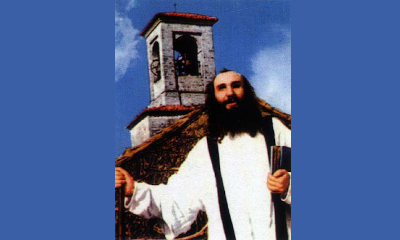
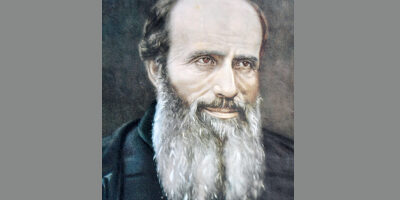
Saint Jacques Berthieu
French missionary priest and martyr (1838-1896)
Dear Friends,
“Prædicate Evangelium: this is the task that the Lord Jesus entrusted to his disciples. This mandate constitutes ‘the primary service that the Church can render to every individual and to all humanity in the modern world’… She herself becomes increasingly radiant as she brings to humanity the supernatural gift of faith as ‘a light for our way, guiding our journey through time.’ (Pope Francis, Constitution Prædicate Evangelium, 19 March 2022, nos. 1-2). Many saints offered their whole selves to fulfill the missionary calling of the Church to evangelize the pagan peoples. Saint Jacques Berthieu carried out this mission in Madagascar in the 19th century.
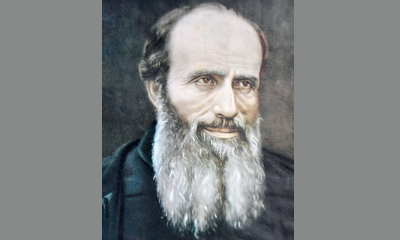 Jacques Berthieu was born on 17 November 1838 in Polminhac, in what is now the department of Cantal in central France; he was baptized on the same day. His parents, Pierre and Catherine, were farmers on a family estate. He was the eldest of seven children in a devoutly Christian household. Evening prayers were said together as a family. Attendance at Sunday Mass was the norm. Should a beggar come by, he would always be given soup and bread, and straw from the barn for a bed. Pierre Berthieu died suddenly in 1865. Jacques was educated in Aurillac by the Brothers of the Christian Schools, and made his first Holy Communion at the age of twelve, when his vocation began to blossom. He entered the minor seminary in Saint-Flour when he was fifteen. Six years later, he was admitted to the major seminary. He was ordained a priest on 21 May 1864, and was then appointed curate of Roannes-Saint-Mary near Aurillac; he remained at the service of this parish of eight hundred souls until 1873. Jacques’ kindness and generosity became proverbial. One day, he asked his mother to knit him a sweater; she replied: “But I only just gave you one!” “That’s true,” the priest replied, “but I met someone who needed it more than I did…”
Jacques seemed to be perfectly in his place in his parish. But for a long time, he had known in his heart that the Lord was calling him to the consecrated life. He later explained: “Two events in my youth struck me without my entirely comprehending their impact: a life of Saint Aloysius Gonzaga which I had received as a present, and my reading the Annals of the Propagation of the Faith… especially in regard to our mission post in Madagascar.” In 1873, at the grotto of Lourdes where he had gone on pilgrimage, his decision was made. On 31 October, he entered the novitiate of the Society of Jesus in Pau. One of his fellow novices later described him as follows: “His gaze was gentle, emanating from two eyes where peace of the soul visibly reigned. He came across as a rural priest, but one who lacked neither subtlety nor distinction. Most noticeable was his expression of frankness and kindness.” In 1874, Gabriel, one of Jacques’ brothers, also entered the Jesuit novitiate: “It was one of the greatest joys of my life,” his elder brother would recall. Jacques himself was sent to Vals, near Le Puy-en-Velay, to advance his own theological studies. There lived Father Ramière, an ardent apostle of the devotion to the Sacred Heart. Touched by the priest’s aura, Jacques consecrated himself to the Sacred Heart in Paray-le-Monial before setting out for Madagascar, where he in turn became an apostle of this devotion among the Malagasy Christians.
His superiors had indeed assigned Father Jacques to Madagascar. The Jesuit mission on this vast island had been established fourteen years earlier. On 26 September 1875, Jacques set sail from the port of Marseille as a fledgling missionary. It would be an uncomfortable voyage, as Father Jacques was very prone to seasickness. After a month at sea, they arrived at Saint-Denis on Réunion Island. Father Jacques was then sent to Sainte-Marie Island (now Nosy Boraha or “Abraham’s Island”), a French colony just off Madagascar with a population of 8,000 inhabitants. There he studied the Malagasy language and formed a dynamic missionary team with two other Jesuit Fathers and the Sisters of Saint Joseph of Cluny. The nuns’ Congregation, founded by Saint Anne-Marie Javouhey, helped missionaries by educating girls and providing many other services. Appointed superior of the mission in 1876, Father Jacques was assisted by a Creole novice, Brother Darbould, whom he held in high esteem. In addition to his material tasks, Brother Darbould also taught catechism to the children.
A Mission Received from the Lord
“Mission,” Pope Francis reminded us, “is a tireless going out to all men and women, in order to invite them to encounter God and enter into communion with him. Tireless! God, great in love and rich in mercy, constantly sets out to encounter all men and women, and to call them to the happiness of his kingdom, even in the face of their indifference or refusal. Jesus Christ, the Good Shepherd and messenger of the Father, went out in search of the lost sheep… The Church, for her part, in fidelity to the mission she has received from the Lord, will continue to go to the ends of the earth, to set out over and over again, without ever growing weary or losing heart in the face of difficulties and obstacles” (Message for World Mission Day, 20 October 2024). “If we go back to the beginnings of the Church, we find a clear affirmation that Christ is the one Savior of all, the only one able to reveal God and lead to God. In reply to the Jewish religious authorities who question the apostles about the healing of the lame man, Peter says: ‘By the name of Jesus Christ of Nazareth whom you crucified, whom God raised from the dead, by him this man is standing before you well… And there is salvation in no one else, for there is no other name under heaven given among men by which we must be saved’ (Acts 4:10, 12). This statement… has a universal value, since for all people-Jews and Gentiles alike—salvation can only come from Jesus Christ” (Encyclical Redemptoris missio, 7 December 1990, no. 5).
In 1878, a fever forced the Father to travel to the island of Réunion to be treated at the military hospital in Saint-Denis. He remained there for five months before returning to his mission. When he became proficient enough in the local language, he began to preach, but realized that the indigenous people, even those who had been baptized, had yet to be fully made Christian, and he abhorred their dissolute morals. Thanks to his apostolate, marital unions were made legitimate. He also took care of orphans and collected money from his people in Auvergne to support them. Evangelization was mainly carried out through education: there were two hundred pupils, boys and girls, in the mission schools. They were taught reading, writing, simple math and catechism, but also the basics of agriculture, as well as sewing for the girls. Brother Darbould testified how Father Jacques was able to become a true father to all: “Never a harsh word or an outburst of anger; he was always in control of himself, listening to complaints and arguments and then speaking about God, and the offense of sin; he resolved difficulties and made peace between adversaries. He treated the Malagasy with as much deference as he did the French, in contrast to the customs of the Europeans of those times.”
The Key Component
In March 1880, the French government issued several decrees prohibiting unauthorized religious from staying in French territory; the Jesuits left Sainte-Marie at the beginning of October 1881 and moved to the island of Madagascar, which was independent at the time. In Tananarive, the capital, the Father was informed of his destination: Ambohimandroso, a mission located more than five hundred kilometers south of the capital, under the direction of Father Fabre, an experienced missionary. This mission post was less than ten years old; it had twenty-five bush posts and twenty-one schools with a total of six hundred pupils. The indigenous people, who were completely illiterate, were strongly attached to ancestor worship and spoke their own language. In addition, the Fathers had to contend with a form of competition from predominantly English Protestant missionaries. Queen Ranavalomanjaka and her main court dignitaries had been won over to Protestantism. Father Berthieu became attached to these tribes and soon learned their language. He was compelled to practice great patience: “This is what it means to be a missionary,” he wrote: “to make oneself all things to all people, both interiorly and externally; to be responsible for everything, people, animals and things and all this in order to gain souls, with a large and generous heart.” At the end of May 1882, at the request of his superiors, Father went to Mananjary, a small port on the east coast. For Corpus Christi, he assembled the faithful from all over the region, about a thousand in number. The procession, well prepared with richly decorated altars, was a great success: even Protestants came to see the “walking prayer.” Father Jacques only stayed in this place for a few weeks.
1883 marked the beginning of the Franco-Hova War (the Hova are the dominant ethnic group on the island of Madagascar, to which the queen belonged). The Hova government took advantage of a legal loophole in order to disinherit the descendants of French landowners. Negotiations with France were set in motion, but they soon soured. In May, all French citizens were expelled from the island. Father Berthieu was forced to leave within 48 hours, on foot, and thus headed for the coast. When he arrived in Tamatave, he was reunited with his fellow priests from Tananarive as well as with Father Cazet, the apostolic prefect. The city was under French control, but besieged: Father Berthieu put his agricultural skills to good use and planted a vegetable garden. His native Auvergnat doggedness enabled him to produce vegetables that the natives considered impossible to grow in that place. Father Jacques remained in the city for eighteen months. In 1885, he applied to become an unpaid military chaplain. This assignment was also a way for him to return once more to the heart of the territory. Father Jacques was sent to the Vohémar area on the north-east coast, held by French troops. He first settled in Ambanio, where he met new Malagasy tribes, as equally addicted to vice as the previous ones, and set up a mission post. He took special care of gravely ill soldiers.
He was relocated to Vohémar in April 1885, and there erected a church. A witness from that period would later testify to his “fabulous kindness.” This quality helped him get on well with the local administrator and the head nurse at the hospital. Both were Protestants, but they were of great service to him. Many soldiers revered the Father; on the other hand, the French colonists and most of the indigenous people provided him with little satisfaction. He did not hide the demands of Christian life, beginning with the unity and the indissolubility of monogamous marriage. Polygamy being the usual practice at the time, he denounced the injustice and the abuses it generated, thus creating enemies, especially among the powerful. He opened free classes for boys and girls, but not without serious difficulties: any moral reproach he addressed to their parents hurt their feelings. “God knows how much I loved and still love the soil of my country and the beloved land of the Auvergne,” he wrote. “And yet God has given me the grace to love even more these uncultivated fields of Madagascar, where I can only catch a few souls for our Lord, and that with difficulty… The mission progresses, even though the fruit is still a matter of hope in some places and hardly visible in others. But what does it matter, so long as we are good sowers? God will give growth when the time is ripe.”
The Father and Mother
A peace treaty was finally signed between France and the government of Madagascar on 17 December 1885. At this point Father Berthieu was required to go to Diego Suarez (at the far north of the island) to replace a colleague who had fallen ill. The small Christian flock of Vohémar saw him leave with deep sadness. At Diego Garcia, he visited the sick, especially the French soldiers, and was generally well received. Having spent three weeks there, he had to leave again. Passing through Sainte-Marie, he found that the parish he had established had suffered greatly since his departure, but in Tananarive, where he arrived on 5 June 1886, the Catholic parishes had held firm during the Fathers’ absence, thanks mainly to the dedication of certain lay Madagascans, in particular the daughter-in-law of the former Prime minister, Blessed Victoire Rasoamanarivo (she was beatified on 30 April 1989).
In July, Father moved to Ambositra, a large town located about 200 km south of the capital. This post had been abandoned by missionaries three years previously because of the war. Although deprived of priests, the faithful there maintained their Christian life despite the antagonism of the governor, a Protestant preacher, and of the civil authorities in general. Father Berthieu became the official correspondent for the French Post Office, a position that opened many doors for him. His kindness and tact helped to smooth relations with the governor, whose rule over his subjects was a harsh one. One day, this individual summoned a number of parishioners to his court over a minor administrative dispute that promised to cost them dearly. The Jesuit showed up at the appointed time and place by their side. “But, Father, I did not summon you!”, exclaimed the governor. “You summoned them, so it concerns me too!”, retorted the missionary. Encouraged by his presence, the parishioners, usually so meek when faced with the authorities, defended themselves courageously. Father Berthieu opened several new missionary posts. From 1891 onwards, it became customary to celebrate Corpus Christi with a solemn procession, which delighted the Malagasy people. One of the Father’s great sorrows was the scant number of his collaborators: he was usually alone, with a coadjutor brother; sometimes another priest would join him, and even more rarely, two. And yet, “the harvest is ripe!”, he said, adding: “While the work is overwhelming, we only do as much as we can.” By now he had become Malagasy with the Malagasy, eating cold rice with his morning coffee. He improvised as an architect for the mission buildings and tended the garden: he was the first winegrower to use an American vine plant resistant to phylloxera, even before it was introduced in France. But above all, he was considered by all as “the Father and Mother.”
“The mission of bringing the Gospel to every creature must necessarily imitate the same ‘style’ of the One who is being preached. In proclaiming to the world ‘the beauty of the saving love of God made manifest in Jesus Christ who died and rose from the dead,’ missionary disciples should do so with joy, magnanimity and benevolence that are the fruits of the Holy Spirit within them” (Pope Francis, Message for World Mission Day 2024).
A Precious Book: the Catechism
In November 1891, Father Jacques was transferred to a mission about 50 km north of Tananarive, in Andrainarivo. The Christian community there, originally consisting only of fervent lay people, had existed since 1869. This mission called on him to adapt to a new language and a new people. He was the only priest for eighteen posts or parishes; religious instruction became his priority. A tireless catechist, he aspired to “teach much and even more!” A young schoolteacher, seeing that he had his catechism open in front of him while on horseback, said to him, “Father, why are you still studying the catechism?” “My child, the catechism is a book that it is impossible to study too deeply, for it contains the entirety of the Catholic doctrine.” Father Jacques also demonstrated great zeal for the sick: “Whether I am eating or sleeping, never be ashamed to call me!” To the south of the village lived two women lepers; he would bring them food and clothing, and taught them the catechism; in the end, he baptized them.
In October 1894, a new conflict broke out with France and the missionaries had to leave. Father was sent to Sainte-Marie Island, his first mission, and then to Réunion. On 1 October 1895, a treaty was signed establishing Madagascar as a French protectorate, and Father Jacques returned to Andrainarivo. In 1896, he was confronted with a political and religious uprising of the Menalamba movement (those who wore “lamba” or red robes): strongly opposed to Christianity, whatever its denomination, and to French rule, the movement was primarily concerned with restoring ancestral fetishism. Father Berthieu was directly targeted, as were the Christian villages. Many churches and Protestant temples were burned down. Father Jacques sought to place the Christians under the protection of French troops and tried as much as possible to remain among them, so as to hearten them. But the tension took its toll on his health: he was forced to spend Easter in bed in Tananarive. In one of his last letters, he wrote: “Let us work relentlessly, and suffer, to gain… Heaven, above all else!”
Pope Francis stated: “We know that among the first Christians missionary zeal had a powerful eschatological dimension. They sensed the urgency of the preaching of the Gospel. Today too it is important to maintain this perspective, since it helps us to evangelize with the joy of those who know that ‘the Lord is near’ and with the hope of those who are pressing forward towards the goal, when all of us will be with Christ at his wedding feast in the kingdom of God. While the world sets before us the various ‘banquets’ of consumerism, selfish comfort, the accumulation of wealth and individualism, the Gospel calls everyone to the divine banquet, marked by joy, sharing, justice and fraternity in communion with God and with others.” (Ibid.).
Praying Until Death
Whenever he could, Father Jacques would join “his” Christians in Andainarivo. In this revolt-ridden territory, his faithful followers—many hundreds of people including the infirm and the wounded—were forced to move from village to village. Our missionary did all he could to help the most disabled among them. He was attacked by the Menalamba rebels on 7 June 1896, but found refuge in the village of Ambohibemasoandro. Even though it was mostly Protestant, he was welcomed by the community; he was even able to celebrate Mass on the morning of June 8 before going into hiding in a Protestant’s house. The rebels found him that same afternoon. They seized him and stripped him of his cassock; one of them yanked off his crucifix, saying, “Is this your amulet, is this how you lead the people astray, and are you going to pray for much longer?” “I must pray until I die,” he replied. One of the attackers struck him on the forehead with a machete; the priest’s blood flowed profusely, but the wound was not deep. The Menalamba led him away. As they moved forward, one of his protégés drew near, and the Father, always committed to the salvation of souls, asked him, “Have you been baptized, my child?” “No,” the latter replied. Searching in his pocket, the Father took out a cross and two medals, which he gave to the man, saying: “Pray to Jesus Christ every day of your life! We will never see each other again, do not forget this day, study the Christian religion and ask for Baptism as soon as you see a priest!” Father Jacques was ardently devoted to the Virgin Mary, whose rosary he often prayed as his favorite prayer: on the way the he recited one Hail Mary after another. Near Ambiatibe, a village 40 km north of Tananarive, it was decided he should be killed. Jacques Berthieu knelt down. One of the chiefs came up to him, saying: “Abandon your detestable religion, stop leading the people astray, and we will make you our advisor and leader, and we will spare you.” “I cannot consent. I would rather die,” the priest replied. He was shot and fatally wounded by the third round of gunfire; a final shot, fired practically at point-blank range, delivered the coup de grace. His body was thrown into the river. Upon his death, several of his attackers embraced the message of the Gospel and were later baptized.
Jacques Berthieu was beatified and declared the first martyr of Madagascar by Pope Saint Paul VI in 1965. Pope Benedict XVI canonized him on 21 October 2012. The Church celebrates his feast day on 8 June. Let us ask Saint Joseph, whom this missionary so ardently revered, to strengthen us in our faith and knowledge of Jesus Christ, to whom we must bear witness throughout our lives.