

June 4, 2025
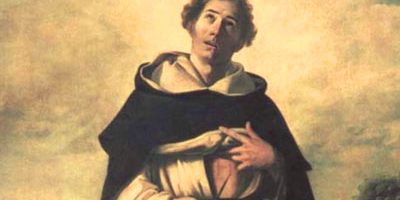
Blessed Henry Suso
Dear Friends,
It is said in the Life of the Blessed Henry Suso that his mother could not attend a Holy Mass without shedding tears of compassion over the sufferings of Jesus and Mary in the Passion. Once he became a Dominican, Henry would in turn develop a very intense devotion to Jesus in his Passion, and made a habit of following him on a prolonged Way of the Cross.
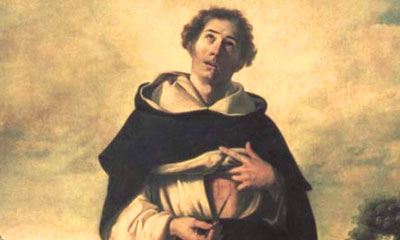 Heinrich Seuse von Berg was born around the year 1295 in the poorer part of the town of Überlingen, on the shores of Lake Constance. His father was a draper while his mother came from a noble family from Swabia. Consumed by the spirit of the world, his father at times violently opposed the way of life of his gentle and very pious wife, who was full of the Spirit of God. Her intense faith saw her through these trials. She also gave birth to a daughter who consecrated her life to God in the Order of Saint Dominic. Henry and his sister received a sound religious education, which instilled in them a love of nature as the creation of divine Love. Their mother died on a Good Friday at the hour of Jesus’ death. After the death of his father, Henry is said to have been visited in a vision by his mother, who begged him to intercede for her husband, who was condemned to endure a long purgatory because of the worldliness of his life. Henry went on to have a revelation that his prayers had been answered.
The Catechism of the Catholic Church teaches: “All who die in God’s grace and friendship, but still imperfectly purified, are indeed assured of their eternal salvation; but after death they undergo purification, so as to achieve the holiness necessary to enter the joy of heaven. This teaching is also based on the practice of prayer for the dead, already mentioned in Sacred Scripture: ‘Therefore Judas [Maccabeus] made atonement for the dead, that they might be delivered from their sin’ (2 Mac 12:46). From the beginning the Church has honored the memory of the dead and offered prayers in suffrage for them, above all the Eucharistic sacrifice, so that, thus purified, they may attain the beatific vision of God. The Church also commends almsgiving, indulgences, and works of penance undertaken on behalf of the dead: ‘Let us help and commemorate them. If Job’s sons were purified by their father’s sacrifice, why would we doubt that our offerings for the dead bring them some consolation? Let us not hesitate to help those who have died and to offer our prayers for them.’ (Saint John Chrysostom)” (nos. 1030, 1032).
Henry entered the Dominican convent of Constance at the age of thirteen, around 1310, and, according to tradition, he took the name Seuse, Latinized as Suso, out of veneration for his mother. He was accepted by the superiors of the Order at such a young age as an exception, because they discerned in him a clearly divine vocation. The Order of Preachers was flourishing at the time and its convents covered Christian Europe, but their discipline was not as strict as it had been in the beginning, and the cloister of Constance was slipping into a state of laxness. Indeed, until he turned eighteen, Henry’s religious life lacked fervor, as he himself would later admit. He understood and wished for the benefits of religious obedience and made his vows wholeheartedly, but without any great desire for personal asceticism. He devoted himself to his studies: Latin, of which he became a master, as well as logic and rhetoric, followed by the study of the Constitutions of the Dominicans, and philosophy and theology according to the teachings of Saint Thomas Aquinas.
Throughout these years, his intention was to praise Divine Wisdom, which is said to be a friend of great choice. His heart fell in love with this Wisdom, but he remained drawn to worldly pleasures and his soul was torn by an inner struggle. However, he ardently desired to see Wisdom. One day, when he was eighteen, it appeared to him: “distant, but very close to his heart.” It showed itself to him as both sublime and humble. Sometimes it appeared to him in the guise of a pure and charming virgin, sometimes in that of a young man of exquisite beauty. “My child,” it said to him, “give Me your heart.” Thrilled by such beauty, Henry was filled with celestial joy. However, after being granted this grace, his temptations returned, overwhelming him and causing him to favor the things of the present over those of the future.
All-Merciful Wisdom
Following another vision on the feast day of Saint Agnes, Suso understood that within the Trinity, Wisdom is more specially the attribute of the Son.
Saint Louis-Marie Grignion de Montfort (1673–1716) would similarly explain: “Substantial or uncreated Wisdom is the Son of God, the second Person of the most Blessed Trinity. In other words, it is eternal Wisdom in eternity or Jesus Christ in time…” (The Love of Eternal Wisdom, nos. 13, 19).
The Wisdom told Friar Henry: “It is I, the all-merciful Wisdom, I Who have opened wide the abyss of infinite mercy… to receive thee and all penitent hearts. It is I, the sweet Eternal Wisdom, Who became wretched and poor that I might guide you back again to thy dignity. It is I, Who suffered bitter death that I might bring thee again to life… It is I, thy Brother. Behold, it is I, thy Bridegroom! Everything that thou didst against Me will I wholly forget, as though it had never happened, provided only that thou return to Me, and never quit Me more” (A Little Book of Eternal Wisdom, ch. 5).
Having realized the danger of engaging with the world, Friar Henry now only went to the visitor’s room in case of necessity. The Desert Fathers became his masters. From the writings of Saint John Cassian he learnt: “It is Christ dying on the cross Who must be our model.” In his desire to unite himself as close as possible to the Passion of the Lord through contemplation, he heeded the advice of Wisdom: “As to other exercises, such as poverty, fasting, watching, and every other castigation, bend them all to this as to their end (contemplation) and use them just so much and do so many of them as may advance thee to it.” As a valiant soldier of Christ, he set about practicing great penances. So deeply was he in love with Christ that he engraved the letters IHS, which stand for Jesus, on his flesh (this is not an example to be followed!).
After 1320, once Suso had completed the standard course of study, he was sent to the Order’s general studium in Cologne for further study of the Bible and scholastic theology. He avidly followed the teaching of illustrious professors, with an especial interest in the biblical commentaries of Meister Eckhart, whom he greatly admired. The latter’s specific advice allowed him to overcome a serious scruple that could have imperiled his vocation. For this Friar Henry always remained deeply grateful to him. But Meister Eckhart was the target of criticism from many, including two Dominican Fathers, and as early as 1325 he was suspected of professing heterodox doctrines. In 1327, he professed his orthodoxy and declared that he retracted all the errors that might have crept into his sermons and writings. Yet in 1329, Pope John XXII, who resided in Avignon, declared twenty-eight theses by Meister Eckhart to be suspect in the bull In agro dominico. Eckhart had died on 28 January 1328, and Suso was probably no longer in Cologne at that time.
In 1992, Cardinal Ratzinger, at the time Prefect of the Congregation for the Doctrine of the Faith, declared Eckhart’s rehabilitation, as requested of the Holy See by the General Chapter of the Dominicans, to be uncalled for, as no personal condemnation was ever made with regard to this author.
Suso wrote a Little Book of Truth in which he took up the theses of his master, clearing up any ambiguity they might contain.
Enduring Contempt With Courage
Full of spiritual fervor, he suffered from the frivolity of both students and teachers who sought not sanctity of life but pride and ostentation. He returned to Constance around 1327 and resumed a rather solitary lifestyle, while taking on the role of lector (the first rank of Dominican professorship). It was in this capacity that he taught and directed the studies of all the friars, a particularly important mission among the Dominicans who are specially dedicated to scholarship. However, his teaching was not always well accepted, as he was still considered to be a disciple of Eckhart. When declared a heretic by two dignitaries of the Order, he was sent to a general chapter held in the Netherlands, probably that of Maastricht in 1330. There he appeared quivering with fear; he was severely reprimanded and threatened with rigorous punishment. On his return to Constance, he was stripped of his lectureship. One day, seeing a dog playing with a piece of cloth, he took it as a sign from Providence calling him to perform penance no longer externally but internally, to be the piece of cloth, the plaything of his friars. He then threw the instruments of penance he had been using into the Rhine. He prostrated himself before the crucifix and asked the Lord: “Teach Your servant, therefore, to endure contempt and ridicule with courage for Your sake.” True holiness requires accepting the trials that Providence allows. He became the object of slander and detraction, and was abandoned by several of his friends.
“Penance,” Madame Royer, an early 20th-century mystic and confidante of the Sacred Heart of Jesus would later say, “does not consist in struggling to seek out sacrifices or extraordinary paths, but in saying ‘amen’ to all the opportunities for mortification that life constantly offers us. It consists in accepting the cross that God continually places on our shoulders.” In the same vein, Sister Lucy, the visionary of Fatima, wrote to the bishop of Gurza: “The Good Lord complains bitterly and sadly about the very limited number of souls in the state of grace, disposed to deny themselves according to what the observance of His law requires of them. Here is the true penance which the Good Lord requests today: the sacrifice which everybody must impose on himself… As mortification, God wants the simple and honest fulfillment of daily tasks, and the acceptance of troubles and hardships. And He desires that this way be clearly made known to souls, for many give to the word ‘penance’ the sense of great austerities, and as they feel neither the strength nor the generosity for that, they get discouraged” (20 April 1943).
The “Friends of God”
Duke Louis IV of Bavaria (1286–1347) had himself crowned Holy Roman Emperor in 1328 without the approval of Pope John XXII, who excommunicated him, leading to grave repercussions in society. Christendom became divided into supporters of the Pope and those of the Emperor. The Dominican Order as a whole remained loyal to the Pope. Suso suffered greatly from this division. Further disasters now struck the community: locusts devoured the harvests in 1338; three years later, floods caused enormous devastation. In 1348, the Black Death sowed terror throughout the West, claiming the lives of at least a third of the population; earthquakes killed some five thousand people. In the face of these evils, fervent Christians strengthened their spiritual life. They felt the urge to console, with great love, Christ, the suffering God, whom so many others had abandoned. A large network of piety spread throughout southern Germany. Its members called themselves the “friends of God,” and their aim was to love the Savior, to unite themselves to his holy mysteries through prayer and the sacraments, to commit themselves to imitating his life and to attain, if He granted them such grace, perfect union with him.
Freed from his duties as a lector, Father Henry, who was then in his forties, was entrusted with the ministry of spiritual direction for the nuns of his Order, and then for other communities, such as the Benedictines. All these nuns greatly appreciated his guidance and held him in genuine veneration. Sister Elisabeth Stagel, a nun from a Dominican convent near Winterthur, became his spiritual daughter. Having been introduced to the teachings of Meister Eckhart, she hungered for his teachings. Henry revealed to her many secrets of his own life. He also wrote numerous letters that bear witness to his saintly friendships.
Thus Suso travelled on foot through Switzerland, the Alsace and the Rhine Valley. He never passed a church without entering to pay his respects to the divine Host. His poetic soul delighted in admiring the countryside and conversing with Wisdom. “Ah, beloved Lord, although I am not worthy to praise Thee, still my soul desires that the heavens should praise Thee, when, in their ravishing beauty and sublime splendor they are lit up with the multitude of glittering stars; and the fair delightful meadow, when, in all the bliss of summer it glistens afresh in blithesome beauty, in manifold flowery adornment… In this transient life there is no truer prelude to the celestial habitations than is to be found among those who praise God in the joy of a serene heart,” he wrote in the Little Book of Eternal Wisdom, ch. 24. We also read in the Life: “And then the loving arms of my soul stretch out and extend themselves towards the innumerable multitude of all creatures, and my intention is even so to turn them all to good account by inciting them to sing joyously, and to offer up their hearts to God…” Indeed, as Saint Ignatius explains, “The other things on the face of the earth are created for the human beings, to help them in the pursuit of the end for which they are created”: “to praise, reverence and serve God our Lord” (Spiritual Exercises, No. 23).
Breaking Bread
Sometimes Suso would go out in search of lost sheep in the poor neighborhoods and the countryside. He wanted to “break bread for the common people and distribute it to the crowds.” His spirituality was inspired not only by the Bible but also by the Holy Fathers, particularly Saint Augustine. There was no doubt on his mind that the interpretation of Scripture must be in line with the commonly accepted opinion in the Church.
“It is clear therefore that Sacred tradition, Sacred Scripture and the teaching authority of the Church, in accord with God’s most wise design, are so linked and joined together that one cannot stand without the others, and that all together and each in its own way under the action of the one Holy Spirit contribute effectively to the salvation of souls” (Vatican II, Dei Verbum, no. 10, § 3; cf. CCC, no. 95).
It was around 1348 that Suso composed the Little Book of Eternal Wisdom, his only work whose full authenticity is indisputable. In the 1330s, perhaps even in 1339, he had already published a book that was quite similar with regard to its topic, Horologium Sapientiæ, but whose style and tone were actually quite different. In the Little Book of Eternal Wisdom, he sought to encourage or develop the love of God in people’s hearts. In it Wisdom tells him: “Therefore, if thou art wishful to behold Me in My uncreated Divinity thou must learn how to know and love Me here in My suffering humanity for this is the speediest way to eternal salvation.” Suso therefore invites his reader to meditate with him on the Passion of Christ. Wisdom continues: “Behold, assiduous meditation on My Passion makes out of a simple man a master of high knowledge; truly it is a living book in which everything is to be found. How right blessed is that man who has it ever before his eyes and studies it! What wisdom, grace, consolation, sweetness, what cleansing from all imperfection, may not such a man obtain through the devout contemplation of My living presence!” (ch. 14). Suso also alluded to the Holy Virgin and to her presence at Calvary, in unfathomable affliction.
The dialogue with Wisdom also includes the visions of the sufferings of hell and the immense joy of the Kingdom of heaven, two truths revealed by Jesus himself. Suso’s desire was to “draw men and women out of the deep groove of their sinful life and lead them to true beauty.”
He clearly showed the two paths of which the Catechism says: “The way of Christ leads to life, the opposite way leads to perdition (Mt 7:13). The Gospel parable of the two ways remains ever present in the catechesis of the Church; it shows the importance of moral decisions for our salvation” (CCC, no. 1696). The Second Vatican Council also emphasizes the issues at stake of life here on earth: “Since however we know not the day nor the hour, on Our Lord’s advice we must be constantly vigilant so that, having finished the course of our earthly life, we may merit to enter into the marriage feast with Him and to be numbered among the blessed and that we may not be ordered to go into eternal fire like the wicked and slothful servant, into the exterior darkness where ‘there will be the weeping and the gnashing of teeth’” (Lumen Gentium, no. 48).
The Catechism teaches: “Those who die in God’s grace and friendship and are perfectly purified live for ever with Christ. They are like God for ever, for they see him as he is, face to face” (CCC, no. 1023).
Thus did Suso describe heaven: “So welcome wilt thou be made in thy fatherland, that the greatest stranger to thee of all its countless hosts will love thee more ardently and faithfully than any father or mother ever loved the child of their bosom in this scene of time… Now, look on the beautiful heavenly fields themselves. Lo! here all delights of summer, here sunny meads of May, here the very valley of bliss, here the glad moments are seen flitting from joy to joy; here harps and viols, here singing, and leaping, and dancing, hand in hand for ever! here the gratification of every desire, here pleasure without pain in everlasting security!” And he concluded: “Grant, O Lord, that these two visions (of heaven and hell) may never disappear from the eyes of my heart, so that I never may lose Thy friendship!” (ch. 12).
The Little Book of Eternal Wisdom includes a second part in which Suso teaches the art of dying well. Man need not fear death when he has prepared himself for it: “Truly thou sittest as a bird on the bough, and art as a man who stands on the water’s edge, and looks at the swift sailing ship in which he will presently take his seat, and sail away for a strange land whence he will never more return” (ch. 21). This is followed by two meditations on the sacrament of the Eucharist and on the praise of God at all times.
The works of Suso enjoyed great success at the end of the Middle Ages. Prominent among his readers were Thomas à Kempis, the presumptive author of the Imitation of Christ, and the English martyr, Saint John Fisher.
“Help Me to Pray!”
Because they refused to obey the schismatic orders of Louis of Bavaria, the Dominicans were forced into exile. They left Constance and took refuge in Diessenhofen, and Suso was appointed prior of the community. He was subject to all sorts of trials on account of his apostolate, including malicious behavior towards him, health issues and horrendous slander regarding his conduct which caused him great inner torture. He was sent to the convent of Ulm in 1347–48, whence he undertook many pastoral journeys. His final years were serene. On 25 January 1366, Suso lay agonizing on his rough cot, praying to Christ: “I beseech Thee to purify me in Thy precious Blood, Thou so merciful!” Then he invoked his favorite saints, Saint Dominic, Saint Thomas and Saint Nicholas: “Raise your hands, help me to pray to Heaven!” When the friars kneeling around his bed began to sing the Salve Regina, he added: “I commend my soul into Thy hands, O my Spouse, O my Mother!… I commend my brethren to Thee with equal love.” Thereupon he gave up his soul to God.. He was beatified in 1831 by Pope Gregory XVI. His feast day is celebrated on 25 January.
Let us ask Blessed Henry Suso to make us know and love Eternal Wisdom, Jesus Christ, the only Son of God, and to strengthen us so that we may bear witness to Him.